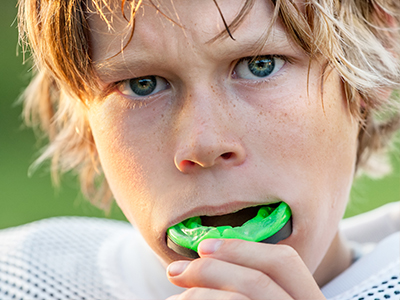
Sports-related impacts are a leading cause of dental and facial injuries across age groups. When athletes collide with other players, the ground, or equipment such as balls, bats, and sticks, the delicate structures of the mouth — teeth, gums, lips, cheeks, tongue, and jaw — are at risk. A well-fitting mouthguard acts as a shock absorber, distributing and reducing the force of an impact so that the odds of a catastrophic dental injury are far lower.
Beyond protecting individual teeth, mouthguards help guard against jaw fractures and soft-tissue lacerations that can occur when sharp enamel or hardware from dental work contacts the inside of the mouth during a blow. Concussions and neck injuries are influenced by how force is transmitted through the head and jaw; while no mouthguard can prevent every head injury, properly designed appliances can reduce transmitted forces and the likelihood of secondary damage to oral tissues.
Wearing a mouthguard is an easy, practical step for athletes at every level — from school teams and recreational leagues to adult amateur sports. For parents and coaches, promoting consistent use is one of the most effective measures to protect long-term oral health and avoid sudden, extensive dental treatments that can follow sports injuries.
Not all mouthguards are created equal. The market offers three main categories: stock (pre-formed), boil-and-bite, and custom-made appliances from a dental professional. Stock guards are the least expensive and come ready to wear, but they often provide a poor fit and can interfere with breathing and speaking. Boil-and-bite options improve fit by softening in hot water and molding to the teeth, yet they still lack the precision and durability of custom devices.
Custom mouthguards are fabricated from impressions taken by a dentist or trained technician, producing a snug, anatomically accurate fit. This precision improves comfort, retention, and protection while minimizing bulk in the mouth — an important factor for athletes who need to breathe and communicate clearly during play. Because they are made from higher-grade materials and shaped to individual anatomy, custom guards tend to perform better under repeated impacts and last longer when cared for properly.
Choosing the right type depends on the level of activity, any existing dental work or orthodontics, and how frequently the guard will be used. For occasional, low-contact activities, a boil-and-bite guard may be sufficient. For contact sports or athletes who play regularly, a custom mouthguard offers superior protection and comfort and is generally the preferred option recommended by dental professionals.
Custom mouthguards are designed with both protection and performance in mind. The fabrication process begins with a precise impression of the teeth and bite, which allows the dental lab to create a guard that conforms closely to the wearer’s oral anatomy. That accurate fit reduces movement of the appliance during impact and distributes forces more evenly across the dental arches, lowering the risk of localized fractures or displacement.
Comfort is another key advantage. A custom guard is thinner and less obtrusive, which helps preserve natural breathing patterns and speech — essential for athletes during competition. Because the appliance fits securely, it is less likely to be removed or adjusted during play, increasing the likelihood that protection will be used consistently over time.
Materials used for custom guards are selected for resilience and shock absorption. Multilayer constructions and advanced thermoplastics provide a balance of softness for impact cushioning and rigidity for force distribution. The result is an appliance that not only protects better but can also be tailored for specific sports, positions, or individual concerns such as bruxism (teeth grinding) or previous dental restorations.
Athletes with orthodontic appliances, implants, crowns, or bridges need special consideration when it comes to mouthguard protection. Conventional stock guards and even many boil-and-bite models may not accommodate brackets and wires comfortably, increasing the risk of soft-tissue injury if the appliance shifts during impact. A custom mouthguard can be designed with extra space or specific relief areas to protect both the teeth and the orthodontic hardware without putting pressure on delicate components.
For patients with implants or fixed prosthetics, a tailored approach ensures that force is distributed in a way that does not jeopardize the restoration. Dentists can modify impressions and guard thickness to support vulnerable regions while still maintaining overall shock absorption. This individualized design minimizes the chance of costly damage to restorations and helps preserve long-term oral health.
When athletes undergo dental treatment, coordinating with their dental team about mouthguard design is important. Adjustments can be made as orthodontic treatment progresses or as new restorations are completed, ensuring the protective appliance continues to fit well and deliver reliable coverage throughout changes to the mouth.
Proper care extends the life and effectiveness of any mouthguard. After each use, rinse the appliance with cool water and gently clean it with a soft toothbrush and mild, non-abrasive soap. Avoid high temperatures or hot water, which can warp thermoplastic materials. Store the mouthguard in a ventilated case to protect it from damage and allow airflow between uses; keep the case clean and dry as well.
Inspect the appliance regularly for signs of wear, tears, or deformation. A guard that becomes thin in places, develops cracks, or no longer fits snugly should be replaced promptly, as damaged guards offer reduced protection. Children and adolescents may need new guards more frequently as their mouths change; adults should also monitor fit, especially after dental work or changes in bite alignment.
Bring your mouthguard to dental appointments so your dentist can check fit and condition. Simple adjustments or relines can often restore comfort and function, but significant damage or changes in oral anatomy typically require a new device. Following routine care recommendations helps ensure the mouthguard remains a reliable line of defense for every practice session and game.
At DentMax, our team helps athletes and parents choose the appropriate mouthguard for their needs and can coordinate custom fabrication for long-term protection. If you have questions about which option is right for you or your child, or want guidance on care and replacement, please contact us for more information.


Sports mouthguards cushion and redistribute the energy from an impact to reduce peak forces on teeth and the jaw. By absorbing shock and creating a protective layer between the upper and lower teeth, a mouthguard helps prevent direct contact that can chip, fracture or displace teeth. The material and fit of the appliance determine how effectively forces are spread across dental arches and away from vulnerable points.
Mouthguards also protect soft tissues such as lips, cheeks and tongue by keeping sharp tooth edges and dental hardware from cutting tissue during a blow. In addition, a stable appliance can reduce the degree of jaw movement on impact, lowering the chance of jaw fractures and minimizing force transmission that might contribute to head and neck injuries. While no device can eliminate every risk, consistent use of a well-fitting guard significantly lowers the likelihood of severe oral trauma.
The three common types are stock, boil-and-bite and custom-made guards, each with different fit and performance characteristics. Stock guards are inexpensive and ready to wear but tend to be bulky and offer poor retention, which can interfere with breathing and proper protection. Boil-and-bite guards improve fit by softening material and molding it around the teeth, but they still lack the precision of a custom device.
Custom guards are fabricated from impressions taken by a dental professional and provide a snug, anatomically accurate fit that improves comfort and retention. They are typically thinner and less obtrusive while offering superior shock absorption and longevity when cared for properly. Choice of type should be guided by the athlete’s level of contact, frequency of use, and any special dental conditions such as orthodontics or restorations.
Custom mouthguards are recommended for high-contact sports because they conform closely to the wearer’s teeth and bite, reducing appliance movement during play. A precise fit disperses impact forces across the dental arch and lowers the chance of localized fractures or tooth displacement. Because they are thinner and more comfortable, custom guards are less likely to be removed during activity, increasing consistent protection.
Advanced materials and multilayer constructions in custom guards balance cushioning and rigidity to handle repeated impacts more effectively than off-the-shelf options. They can also be tailored for breathing, communication, and integration with helmets or other equipment, which matters for performance in many sports. For athletes with frequent play schedules or positions that experience high-impact contact, a custom device is typically the best protective choice.
Mouthguards can reduce the magnitude of forces transmitted through the jaw and skull, potentially lowering risk factors associated with certain head injuries. They act mainly by absorbing impact energy and preventing direct dental contact that can transmit force spikes to surrounding bone and soft tissue. This mechanical function may help reduce secondary injuries to the mouth and facial structures after a blow.
Current research shows that mouthguards are not a guaranteed prevention for concussions, as concussion mechanisms are complex and multifactorial. Instead, they are an adjunctive protective measure that can modify the way forces are distributed during impact and may contribute to a reduced incidence of certain types of head trauma. The protective benefit is greatest with a properly fitted, well-maintained appliance used consistently during play.
Orthodontic appliances, implants and fixed restorations create unique contours and pressure points that off-the-shelf guards may not accommodate safely. A poorly fitting guard can rub against brackets, trap food and increase soft-tissue irritation, or transfer uneven forces to implants and crowns. These issues make a tailored approach especially important for athletes with existing dental work.
Custom mouthguards can be designed with relief areas, additional padding or modified thickness to protect both the teeth and the orthodontic or restorative hardware. Dentists can monitor fit as orthodontic treatment progresses and adjust or remake the device as needed to maintain protection and comfort. Coordinating guard design with the dental team reduces the risk of damage to restorations and helps preserve oral health during sports participation.
The process begins with an evaluation in the dental office to review the sport, playing position, medical and dental history, and any special concerns. Impressions or digital scans are then taken to capture the teeth and bite relationship, which guides the guard’s shape and thickness. This detailed record ensures the laboratory can fabricate an appliance that fits precisely and accommodates any orthodontic or restorative features.
At DentMax, our team works with the lab to select materials and construction appropriate for the athlete’s needs, and the finished guard is tried in and adjusted for comfort and retention. We provide guidance on care, fit checks and follow-up so the appliance continues to perform well as the athlete’s dentition changes or activity levels evolve. Periodic reviews after dental treatment or growth spurts help determine when a reline or replacement is necessary to maintain optimal protection.
Rinse the mouthguard with cool water immediately after use and clean it daily with a soft toothbrush and mild, non-abrasive soap. Avoid hot water, abrasive cleaners or household disinfectants that can warp or damage the material. Allow the guard to air dry completely before storing to discourage bacterial growth.
Store the appliance in a ventilated case that protects it from crushing while allowing airflow between uses. Keep the case clean and dry and avoid leaving the guard in direct sunlight, in a hot car or near radiators where high heat can deform it. Bring the guard to dental appointments so a clinician can inspect it for wear and make adjustments if needed.
Replace a mouthguard if you notice tears, thinning areas, cracks or if the device no longer fits snugly on the teeth. These signs indicate diminished shock absorption and a higher risk of injury during impact. Children and adolescents often need new guards more frequently because of growth and dental development.
A guard should also be replaced after a significant impact even if it appears intact, since internal damage can reduce protective function. Any time you undergo major dental work or orthodontic changes, schedule a fit check to determine whether a reline or new appliance is required. Routine inspection and timely replacement ensure the guard remains an effective component of your injury-prevention plan.
Different sports present different collision patterns, contact levels and equipment interactions, which influence guard design and thickness. High-impact sports like football, hockey and lacrosse often require durable, multilayer guards with strong retention, while lower-contact activities may allow simpler designs. Players who wear helmets or face cages need guards that integrate comfortably with protective gear to avoid interference.
Positions within the same sport can also have varied demands, and custom guards can be tailored to balance protection, breathing and communication for a specific role. Some sports organizations set rules about allowable mouthguard styles, so athletes and parents should confirm compliance with coaches or governing bodies. A dental professional can recommend the best configuration based on the athlete’s sport, position and personal anatomy.
Your dental team can evaluate individual risk factors, verify fit and recommend the appropriate type of mouthguard for your sport and mouth anatomy. They can also create custom devices, advise on modifications for orthodontics or restorations, and perform adjustments for comfort and retention. Having the guard checked professionally increases the likelihood it will provide reliable protection when you need it most.
At DentMax in Woodland Park, NJ, Dr. Ahmed Jaheen and our clinical staff work with athletes and parents to develop a long-term plan for protection that includes fitting, maintenance and timely replacement. We educate patients about proper care, monitor fit through routine visits and coordinate with other healthcare providers as needed to support safe sports participation. Scheduling an evaluation before the season starts helps ensure athletes are equipped and confident when they return to play.

We’re here to help you take the next step in your care.
Whether you have a question, need to schedule an appointment, or want to learn more about our services, our friendly team is ready to assist. Reach out today and we’ll help you find a time that works for you.